
It seems like your message might be incomplete or cut off. Could you please clarify what you're asking for? Whether it's help with a specific topic, a question about technology, writing, or something else—I'm here to assist! 😊
Roblox's launch of its License Manager platform marks a significant evolution in how user-generated content (UGC) and intellectual property (IP) intersect on the gaming platform. By enabling "eligible creators" to legally access and integrate assets from major franchises like Squid Game, Stranger Things, Twilight, Saw, Yakuza, and Like a Dragon, Roblox is democratizing IP licensing—once a gatekept process dominated by large studios with legal teams and deep pockets.
This shift reflects a broader strategy to:
- Empower indie creators with tools and rights to build immersive experiences using beloved media.
- Strengthen partnerships with entertainment giants like Netflix, Lionsgate, and Sega, who now have greater control over how their IPs are used—with options for revenue sharing, usage monitoring, and custom licensing terms.
- Introduce transparency and compliance, allowing rights holders to "proactively scan" experiences for unauthorized IP use, a move that hints at future enforcement mechanisms against unlicensed fan games.
While the platform touts a "fan-driven, open-source-style model" that celebrates creativity, the inclusion of enforcement features raises concerns about content moderation, free expression, and creators’ autonomy—especially given the backlash from the #BoycottTheHatch campaign.
The backlash over The Hatch event, which drew 1,000 developers and was marketed as Roblox’s largest Easter egg hunt, highlights growing tensions between the platform’s commercial ambitions and community safety. Many users, particularly parents and younger players, criticized the event for promoting potentially unsafe behavior, inappropriate content, and a lack of age-appropriate safeguards.
This duality defines Roblox’s current challenge:
- On one hand, innovation and expansion: License Manager could unlock new creative possibilities and revenue opportunities for both creators and IP holders.
- On the other, community trust and safety: The same tools that empower creators can also be used to police or penalize them, especially if enforcement becomes automated or opaque.
As Roblox expands into more licensed content and tighter IP integration, the platform will need to balance:
✅ Innovation and creator empowerment
❌ Overreach and censorship
✅ Revenue and partnerships
❌ Erosion of trust from users
Ultimately, the success of License Manager won’t just depend on how many franchises join, but on how transparent, fair, and inclusive the system is—especially for younger creators and fans who see Roblox not just as a game, but as a creative home.
-
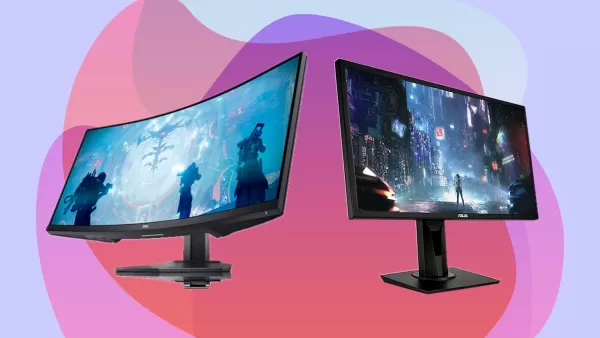 Un moniteur de jeu est la pierre angulaire d’une configuration sérieuse. Même avec un PC gamer haute performance, votre écran détermine in fine comment cette puissance se traduit visuellement. Avec l’abondance de marques et de modèles disponibles, chAuteur : Anthony May 11,2026
 -
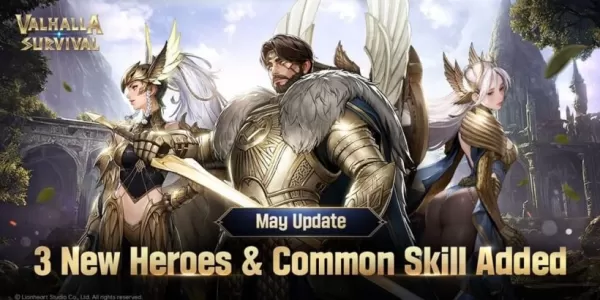 Valhalla Survival introduit trois nouveaux héros jouables Mani, Idis et Sol sont désormais disponibles, avec une nouvelle capacité de Ballista La dernière mise à jour ajoute le mode Cauchemar, un raid contre un boss, ainsi que diverses améliorationAuteur : Violet May 09,2026
-
 4 Fotos 1 PalabraTélécharger
 -
 Slots 777 Winner - Casino GameTélécharger
 -
 CricVricTélécharger
 -
 Brasileiro Série B CalculatorTélécharger
 -
 BetwayTélécharger
 -
 Survival 456 But It's ImpostorTélécharger
 -
 Bá Vương CLUBTélécharger
 -
 Catenaccio Football ManagerTélécharger
 -
 The White CrocodileTélécharger
 -
 Belote ScoreTélécharger







- STALKER 2 : Heart of Chornobyl – Toutes les fins (et comment les obtenir)
- Métaphore : ReFantazio – Guide complet des obligations
- NYT Astuces et réponses: Guide du 10 janvier 2025
- Le RPG Steampunk Eldgear dévoilé par KEMCO
- Découvrez les artefacts dans Stalker 2: Emplacements et acquisition
- Champignon Go ! Lance une aventure de donjon coopératif pour les fans de Fungi
-
1Guide ultime des applications de beauté: avis et recommandations
-
2Meilleurs jeux d'action pour Android
-
3Meilleurs jeux multijoueurs compétitifs sur Android
-
4Latest News & Magazines Apps for Android
-
5Jeux occasionnels amusants pour tout le monde
-
6Smart Shopping: Conseils et astuces pour économiser de l'argent